IOWarp builds CLIO, open-source software that puts AI agents to work on your scientific data and leaves a record your people can check. It runs on the systems you already operate, from a workstation to a national facility. In AI-driven science, context is part of the system.
Choose the product closest to your work. CLIO Agent and CLIO Coder serve people working on scientific data and scientific software; CLIO Kit supplies the scientific tools both share, and CLIO Core runs the context hierarchy underneath.
FIG S.1 · HOW THE CLIO PRODUCTS CONNECTPEOPLE · AGENTS · TOOLS · RUNTIME · DATA
Scroll sideways to trace the full schematic →
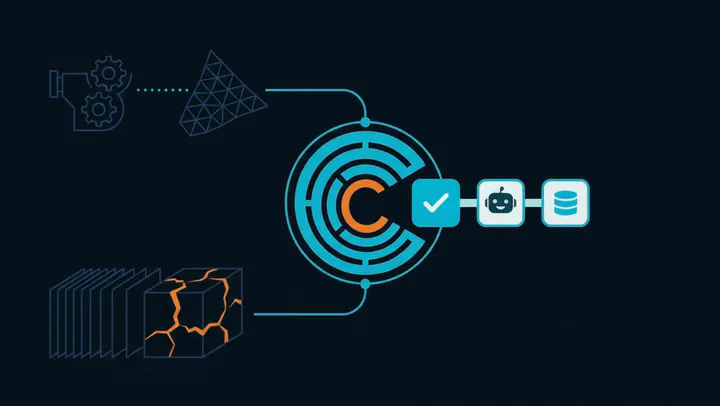
CLIO Agent serves scientific data and papers; CLIO Coder serves scientific software. Both use the models you choose and call tools in CLIO Kit, while CLIO Core stores durable memory and moves context across memory and storage tiers.
IOWarp will launch the full CLIO stack at SC26 in Chicago, November 15–20, 2026. IOWarp at SC26 →
WHAT IS THIS?
The whole stack, from GPU to agent.
IOWarp is the research and engineering team at the Gnosis Research Center, Illinois Tech, that builds CLIO. CLIO, the Context Layer for I/O, is an open-source software stack that connects AI agents to scientific data and the systems that hold it.
It matters because scientific data is only useful with its meaning attached. Point an agent at an HDF5 file or a Slurm queue and it needs the right data, memory that outlasts the session, and a path from a laptop to a national system. CLIO supplies each of those, so an organization can bring AI into its science and hold every change to its own checks.
Adoption is incremental. CLIO Agent, CLIO Coder, CLIO Kit, and CLIO Core each install on their own.
Tiered devices, I/O adapters, compression, and data connectors.
02Operating system
The Linux I/O path, from asynchronous I/O to kernel modules.
01Accelerators
GPU code that reaches the storage hierarchy directly.
CONTEXT CARRIED THROUGH EVERY LAYER
ACROSS DISCIPLINES
One agentic framework. Ready for your science.
CLIO began in materials science, expanded to mechanical engineering simulations when neighboring groups saw it run, and now reaches analytical chemistry, federated earth-science catalogs, and DOE Genesis Mission workflows at Argonne and PNNL. Each discipline keeps the same CLIO backbone while swapping in the tools, domain skills, and checks its workflow demands.
FIG W.1 · Where CLIO fits in a research group’s workflowCLOSED-LOOP SCIENTIFIC WORKFLOW
Scroll sideways to see every step of the lab loop →
CLIO handles the reading, data plumbing, code verification, and study records around an experiment; the scientists and their instruments keep the scientific judgment.
DOMAIN PROGRESSION · How one discipline unlocks the nextSELECT A FIELD TO INSPECT THE PATTERN
01 · Where CLIO started
Materials science
Additive manufacturing, X-ray computed tomography, segmentation, and next-experiment planning across instruments and clusters.
THE LAB’S WORKFLOW
Printed specimens move from design to tomography scans and fatigue testing, where process history and volumes have to stay linked.
SWAPPED DOMAIN LAYER · KIT & PLUGINS
wtf-MS and Materio study-planning plugins, HDF5 and Parquet tools, ParaView rendering, and Globus data assimilation.
CONSTANT CLIO BACKBONE
CLIO Agent keeps study questions and observations tied to tool calls; CLIO Core holds the shared part record across stages.
Experimental labs working from bench instruments, assay tables, and small-data machine learning without needing a supercomputer.
THE LAB’S WORKFLOW
Measurements stay at the bench while students and researchers organize instrument exports, train and validate predictive models, and preserve continuity when cohorts rotate.
SWAPPED DOMAIN LAYER · KIT & PLUGINS
Pandas and Parquet profiling, scripted matplotlib figures, marimo notebooks, and method-validation checks on held-out samples.
CONSTANT CLIO BACKBONE
CLIO Agent keeps computational steps as auditable as a validated lab method, and CLIO Coder reruns model pipelines from pinned inputs.
Any scientific group whose day crosses literature, messy data files, analysis scripts, predictive models, and manuscripts.
THE LAB’S WORKFLOW
Keep physical instruments and scientific judgment with your people, and hand the repetitive reading, data plumbing, code verification, and record-keeping to CLIO.
SWAPPED DOMAIN LAYER · KIT & PLUGINS
Pick existing servers from CLIO Kit or add a focused MCP server, a plain-Markdown domain skill, and your project’s own validation checks.
CONSTANT CLIO BACKBONE
CLIO Agent, CLIO Coder, CLIO Kit, and CLIO Core run on the models and machines your organization already approves.
A6GPU direct I/O and compressionAccelerated computingCUDA kernels that read and write IOWarp from the GPU, GPU payloads offloaded to host memory and NVMe, and compression on the device. A research thread built on NVIDIA technologies.
IOWarp will launch the full CLIO stack at SC26 in Chicago. The team will present work on simulation monitoring, GPU I/O, storage observability, compressed training data, and agent fleets through workshop presentations, research posters, a conference paper, and an HDF5 birds-of-a-feather session with The HDF Group. The user group will gather around these events, and the Technical Advisory Board will form at the end of November.